 acadewise
AI influencers are completely fabricated digital characters that use artificial intelligence to engage with audiences and promote products on social media . Unlike traditional influencers who are real people, these virtual stars can amass just as many followers on platforms like Instagram and TikTok .
We’ve watched virtual influencers like Lil Miquela and Shudu Gram flip the script on conventional fame . What makes AI influencers particularly appealing for brands is their ability to operate 24/7 across multiple platforms and languages, while being perfectly aligned with a company’s values . Furthermore, they offer a more straightforward, cost-effective alternative to human influencers, which is why experts predict they’ll significantly impact influencer marketing trends in 2025 .
In this article, we’ll explore what AI influencers truly are, how they’re created, the pros and cons of working with them, and introduce you to the top virtual stars dominating social media in 2025.
What is an AI Influencer?
“AI is a mystery. To many, it’s a threat. It turns out that understanding a mystery not only makes it feel less like a threat, it gives us the confidence to make it into something better.” — Seth Godin, Author and Marketing Thought Leader
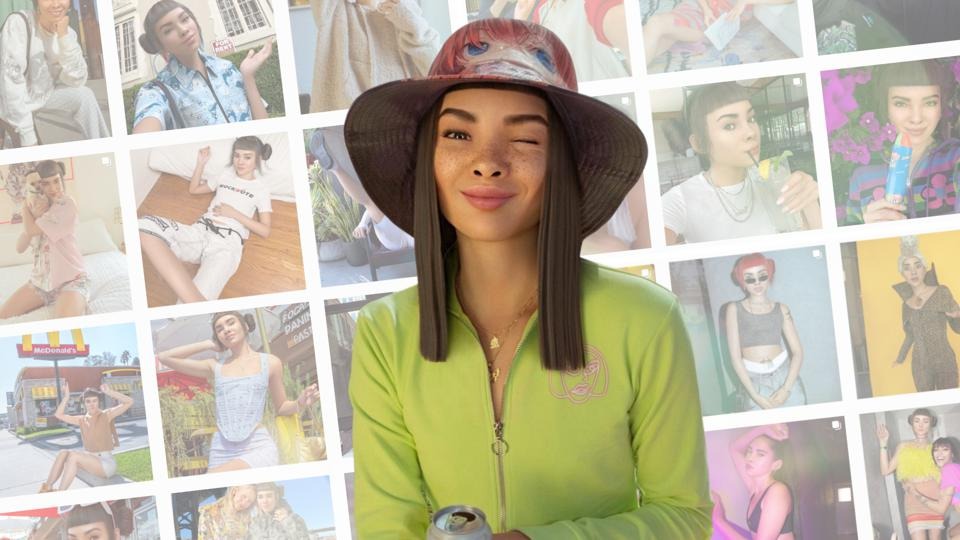
Virtual influencers exist exclusively in the digital realm as computer-generated personalities designed to engage with audiences just like human social media stars. These digital personas are defined as “digital characters created in computer graphic software, given a personality defined by a first-person view of the world, and made accessible on media platforms for the sake of influence” [1].
Created using sophisticated computer-generated imagery (CGI), motion capture technology, and artificial intelligence, these digital personalities range from cartoonish 3D characters like noonoouri to photorealistic human-like images such as Aitana Lopez [2]. Each AI influencer has a carefully constructed backstory, personality traits, and social interactions that mimic real-life influencers—posting selfies, attending events, and even engaging in public conversations with other virtual personalities [2].
How they differ from human influencers
The most obvious distinction is authenticity—human influencers build connections through genuine personal experiences, whereas AI influencers follow prepared storylines managed by creative teams [3]. Additionally, these virtual personas offer several advantages over their human counterparts:
- They remain stable and consistent without being affected by physical limitations or feelings [1]
- They cannot develop independent thoughts about products unless programmed to do so [1]
- Their messaging stays under complete brand control without risk of scandals [1]
Essentially, while human influencers live unscripted lives, AI influencers operate within carefully designed parameters that eliminate unpredictability.
Why they are gaining popularity
The market for AI influencers is expanding rapidly, —representing nearly 29% of the influencer marketing industry’s total value projected to reach $6.95 billion in 2024[3]. This growth is expected to continue, with estimates suggesting the virtual influencer market will reach $37.80 billion by 2030 [3].
Brands are increasingly drawn to these digital personalities because they typically cost a fraction of what human influencers charge. For instance, Lil Miquela (with 2.5 million Instagram followers) compared to around $250,000 for human influencers with similar followings charges approximately $9,000 per post[4].
Consequently, these virtual personas are gaining traction with audiences—58% of US consumers who use social networks already follow at least one virtual influencer [1]. Moreover, virtual influencers achieve approximately three times more engagement than their human counterparts [5], making them increasingly valuable for marketing campaigns.
As one industry expert noted, “Virtual influencers are appealing to this next generation of individuals who are already living in a digital world” [2], suggesting their relevance will only continue to grow as technology advances.
How AI Influencers Are Created
Creating an AI influencer involves sophisticated technology combined with creative storytelling. The development process includes several carefully executed stages that bring these digital personalities to life.
Designing the digital persona
Building a virtual influencer begins with defining their personality, appearance, and backstory. Teams of graphic designers and 3D artists use advanced CGI and motion capture technology to craft visually appealing characters that range from stylized avatars to hyper-realistic human replicas. The creators focus on defining core values, goals, and even quirks that make the influencer relatable to specific target audiences. Facial expressions are broken down into individual muscle movements to create authentic emotional displays that trigger user engagement.
Programming interactions and behavior
Behind every AI influencer is a technological framework enabling human-like interaction. Natural language processing allows these digital personalities to understand and generate language for crafting tweets, responding to comments, and writing blog posts. Computer vision enables them to interpret visual inputs, creating lifelike interactions on platforms like Instagram and TikTok. Advanced algorithms teach the AI influencer behavioral patterns, language nuances, and audience preferences, allowing them to respond naturally while adhering to brand guidelines.
Launching on social media platforms
Once developed, AI influencers are deployed across carefully selected social media channels. Their profiles are optimized with complete bios, consistent usernames, and striking profile pictures. Content calendars guide regular posting schedules across formats including photos, videos, stories, and interactive features. Initially, human teams manage comments and direct messages before implementing more automated responses as the AI learns.
Ongoing optimization and updates
The most successful AI influencers continually evolve based on audience feedback. Developers monitor engagement metrics and audience responses, making adjustments to improve personality traits, content style, or interaction strategies. This ensures the influencer remains effective and appealing over time. Research shows balancing the intensity of facial muscle movements in images is crucial for streamlining the interplay between technology and human engagement.
Pros and Cons of Using AI Influencers
“Artificial intelligence is growing up fast, as are robots whose facial expressions can elicit empathy and make your mirror neurons quiver.” — Diane Ackerman, Author and Naturalist
## Pros and Cons of Using AI Influencers As brands embrace virtual personalities in their marketing strategies, understanding both benefits and drawbacks becomes crucial for informed decisions.
Advantages: control, scalability, and cost
Virtual influencers offer unprecedented control over brand messaging and image, eliminating reputational risks often associated with human counterparts. Indeed, these digital personalities operate 24/7 across platforms and languages, driving on platforms like Instagram up to 3% more engagement[6]. From a financial perspective, switching from human to AI influencers can reduce campaign costs by approximately 30% [6], removing expenses related to travel, accommodation, and logistics.
Challenges: authenticity and emotional connection
Despite their benefits, AI influencers struggle with authenticity—a critical issue since as their top criterion when following influencers 58% of consumers rank authenticity[6]. Human influencers naturally forge emotional connections through personal experiences, whereas AI avatars lack this emotional depth, potentially limiting long-term audience relationships. According to research, followers develop stronger connections with human influencers, finding them more trustworthy and relatable [7].
Ethical concerns and transparency issues
Ethical considerations abound when using AI influencers. First, these digital entities cannot provide genuine product recommendations, raising questions about consumer manipulation [6]. Additionally, regulatory scrutiny is increasing, with markets like Spain already mandating transparency in paid campaigns [6]. Furthermore, research shows that brands using AI influencers may face greater reputational damage if their virtual personality makes misleading claims about products [8].
Top AI Influencers to Know in 2025
Image Source: Yelzkizi
Top AI Influencers to Know in 2025
In today’s digital landscape, several virtual personalities have risen to prominence, each with unique characteristics and impressive followings. Curious about connecting with AI influencer creators for your business? Reach out via wa.me/+919257660411 for expert guidance.
Lil Miquela
Created in 2016 by Brud (now owned by Dapper Labs), this Brazilian-American virtual trendsetter boasts over 2.5 million Instagram followers[9]. Originally presented as a 19-year-old (now 22), Miquela has collaborated with luxury brands like Prada and Calvin Klein while building a music career. Notably, she launched a 2025 campaign with the National Marrow Donor Program to raise awareness for bone marrow donation [2].
Shudu
Known as “the world’s first digital supermodel,” Shudu was created in 2017 by photographer Cameron-James Wilson [4]. Her photorealistic beauty has attracted and partnerships with Fenty Beauty, Balmain, and Vogue around 240,000 followers[9]. Her existence has sparked conversations about beauty standards and representation in fashion.
Aitana Lopez
This Spanish virtual model developed by The Clueless agency has rapidly gained popularity with over 326,000 followers [9]. Currently earning up to €10,000 monthly through brand collaborations [10], Aitana was designed to overcome the unpredictability of human influencers while maintaining a compelling fitness and lifestyle presence.
Lu do Magalu
Presently the most followed virtual influencer globally with over 7.1 million Instagram followers [9], Lu began in 2003 as a virtual assistant for Brazilian retail giant Magazine Luiza. She shares product reviews, shopping tips, and social awareness campaigns, helping the company build strong connections with younger shoppers.
Imma
Japan’s premier virtual influencer is instantly recognizable by her pink bob haircut and minimalist fashion sense. With 388,000 followers [9], she collaborates with high-fashion brands like Dior, Valentino, and appeared in Vogue Japan. Created using real-time CG rendering and AI motion tracking, Imma represents Japan’s blend of technology and tradition.
Kyra
India’s first virtual influencer has amassed over 250,000 followers since her 2022 launch by FUTR Studios [11]. Kyra engages in fashion, travel, and lifestyle content while partnering with brands like Titan, Morris Garages India, and ITC. Her creators are developing AI language models to enable interactive conversations with followers.
Bee Influencer
Affectionately known as “B,” this unique virtual bee was created to raise awareness about bee conservation. With 95,000 followers [9], B shares environmental education content alongside charming “bee selfies.” Through partnerships with sustainability brands and NGOs, this virtual advocate makes climate conversations more engaging.
Milla Sofia
This hyperrealistic Finnish AI model has gained over 115,000 followers with elegant fashion posts and lifestyle content [9]. Though clearly labeled as synthetic, her imagery is so convincing that many followers initially believed she was human. Milla often confuses viewers with her realistic appearance, blurring the line between virtual and reality.
Conclusion
AI influencers undoubtedly represent a fascinating intersection of technology, creativity, and marketing strategy. Throughout this article, we’ve explored how these digital personalities are transforming social media landscapes through sophisticated CGI and artificial intelligence technologies. Additionally, we’ve seen how brands can benefit from their 24/7 availability, reduced costs, and complete messaging control.
Nevertheless, the question of authenticity remains central to this evolving phenomenon. While virtual influencers generate impressive engagement rates and follower counts, human influencers still hold the advantage when it comes to creating genuine emotional connections. Therefore, brands must carefully weigh these tradeoffs when developing their influencer marketing strategies.
Looking ahead, the AI influencer market will likely continue its explosive growth trajectory, offering exciting opportunities for innovative marketing campaigns. Curious about integrating these virtual personalities into your own marketing strategy? Reach out directly via wa.me/+919257660411 for personalized guidance on selecting the right AI influencer partnerships.
Although ethical considerations around transparency and authenticity certainly warrant attention, AI influencers have clearly established themselves as more than just a passing trend. Rather, they represent a significant evolution in how brands connect with digital-native audiences. The virtual influencers highlighted above demonstrate just how compelling these digital personalities can become when crafted with creativity and strategic vision.
The rise of AI influencers ultimately reflects our increasingly digital world—one where the lines between virtual and reality continue to blur. Whether you embrace this technology or approach it with caution, understanding its capabilities and limitations remains essential for navigating the ever-changing social media landscape of 2025 and beyond.
Key Takeaways
AI influencers are revolutionizing digital marketing by offering brands unprecedented control and cost-effectiveness, but they come with significant authenticity challenges that marketers must carefully consider.
• AI influencers are computer-generated personalities that cost 30% less than humans and generate 3x more engagement rates • Virtual influencers operate 24/7 across platforms without scandals, but struggle with authentic emotional connections that 58% of consumers value • The AI influencer market is exploding from $6.95 billion in 2024 to a projected $37.80 billion by 2030 • Top performers like Lu do Magalu (7.1M followers) and Lil Miquela (2.5M followers) prove virtual stars can achieve massive reach • Brands must balance cost savings and control against ethical transparency concerns and potential authenticity backlash
While AI influencers offer compelling advantages in scalability and brand safety, success depends on strategically addressing the authenticity gap that remains their biggest limitation in building lasting audience relationships.
FAQs
Q1. What exactly are AI influencers? AI influencers are computer-generated digital personalities designed to engage with audiences on social media platforms. They are created using advanced CGI, motion capture technology, and artificial intelligence to mimic human influencers in promoting products and interacting with followers.
Q2. How do AI influencers differ from human influencers? The main difference lies in authenticity. While human influencers build connections through genuine personal experiences, AI influencers follow pre-programmed storylines managed by creative teams. AI influencers offer more control, consistency, and cost-effectiveness for brands, but may lack the emotional depth of their human counterparts.
Q3. Why are brands increasingly using AI influencers? Brands are drawn to AI influencers due to their cost-effectiveness, 24/7 availability across platforms and languages, and the ability to maintain complete control over messaging. They also typically generate higher engagement rates compared to human influencers, making them valuable for marketing campaigns.
Q4. What are some ethical concerns surrounding AI influencers? Key ethical issues include transparency in advertising, potential manipulation of consumers, and the inability of AI influencers to provide genuine product recommendations. There are also concerns about the impact on beauty standards and representation in media, as well as the potential for misleading claims about products.
Q5. Who are some of the top AI influencers in 2025? Some prominent AI influencers include Lil Miquela, a virtual trendsetter with over 2.5 million Instagram followers; Shudu, known as the world’s first digital supermodel; Lu do Magalu, the most followed virtual influencer globally with over 7.1 million followers; and Aitana Lopez, a Spanish virtual model earning up to €10,000 monthly through brand collaborations.
References
[1] – https://www.sciencedirect.com/science/article/pii/S0148296323008524
[2] – https://en.wikipedia.org/wiki/Miquela
[3] – https://hypeauditor.com/blog/ai-influencers-vs-human-influencers-who-s-best-for-brands-/
[4] – https://en.wikipedia.org/wiki/Shudu_Gram
[5] – https://influencermarketinghub.com/virtual-influencers/
[7] – https://www.sciencedirect.com/science/article/abs/pii/S0007681322001008
[8] – https://news.northeastern.edu/2025/02/25/ai-influencer-marketing-brand-trust/
[9] – https://www.amraandelma.com/top-ai-generated-influencers/

AB77bet, I tried some games that was recommended from my friends here, AB77bet. Nothing too amazing, but it’s got lots of options for many different games. You might luck out with a game or two! Check it out: ab77bet