 acadewise
AI-powered cybersecurity is becoming critical in 2025 as cyber threats evolve faster than ever. Two especially alarming trends are deepfakes—AI-generated or manipulated audio, video, or images—and ransomware, now frequently enhanced by AI to be more effective, stealthy, and damaging. As organizations, governments, and individuals scramble to keep up, AI isn’t just part of the problem—it’s becoming a critical part of the defence. This blog explores how deepfakes and ransomware are being weaponized, the role of AI both for offense and defence, current tools & strategies, challenges, and what the future might hold.
What Are Deepfakes & Modern Ransomware?
- Deepfakes refer to multimedia content (videos, images, voices) generated or altered by AI so convincingly that they may appear real—for example, a video of someone saying something they never said. They are used in misinformation campaigns, scams, identity fraud, or social engineering.
- Ransomware is malicious software that encrypts a victim’s data, withholding access until a ransom is paid. Modern ransomware used in criminal campaigns now often uses AI to optimize its attack surface, generate convincing phishing messages, adapt to countermeasures, and choose high-value targets.
Both threats share a common pattern in 2025: they increasingly use AI not just for generation (deepfakes) or encryption (ransomware) but for social engineering, adaptability, scale, and stealth.
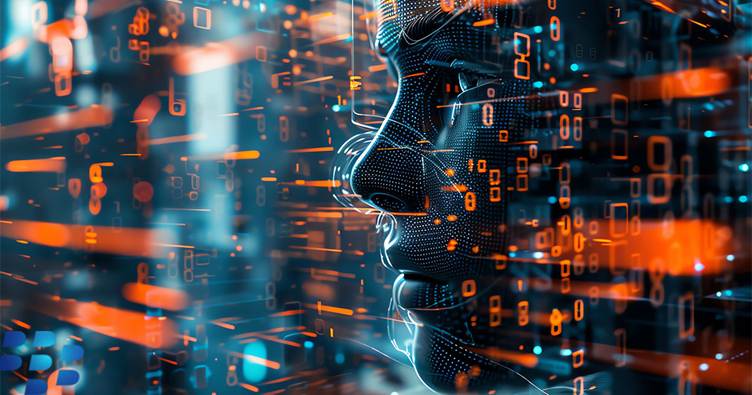
Figure 1 :Deepfakes & Modern Ransomware?
Rising Threats: Stats & Trends
Here are some recent figures to show just how much bigger the threats have become:
- A recent Statistics & Q/A magazine survey found that 41% of active ransomware families include AI components for adaptive payload delivery. SQ Magazine
- The same source reports that synthetic media attacks (deepfakes, etc.) grew by 62% year-over-year in 2025, often targeting enterprise verification systems. SQ Magazine
- In India, McAfee research found that on average people see 4.7 deepfake videos daily, and 66% of people report that they or someone they know fell victim to deepfake video scams in the past 12 months. India Today
- Another report (MIT & Safe Security) examined ~2,800 ransomware attacks, finding 80% of them were powered in some way by AI—via phishing, social engineering, code generation, or other methods. MIT Sloan
- Trend Micro’s findings show that 36% of consumers reported scam attempts using deepfakes. Trend Micro
These stats illustrate that the landscape is changing: deepfake attacks are more common; ransomware is smarter; threat actors are using AI to scale attacks, adapt to defences, and evade detection.
How AI Is Being Used Against Us
To understand what defences, need to do, first we should see how attackers use AI:
- Enhanced Phishing & Social Engineering
Attackers use AI (LLMs—large language models) to craft more personalized phishing emails, messages, or deepfake voice calls. These tools help mimic speech patterns, tone, style—even simulate voices of known people to trick victims. SQ Magazine+1
- Deepfake Impersonation in Video/Audio
Deepfake audio and video are used to impersonate executives or trusted persons, to authorize money transfers or steal data. SQ Magazine+1
- Adaptive Ransomware
Modern ransomware isn’t just “encrypt all files.” Many families now use AI modules to adapt their payload depending on the environment (OS type, presence of detection software), choose what to encrypt first, or avoid detection. SQ Magazine+1
- Automation of Attack Tools
AI is enabling attackers with less technical skill to launch more effective attacks, using off-the-shelf generative tools, automated scripts, or marketplaces (i.e., Ransomware-as-a-Service) that integrate AI components. World Economic Forum+1
These techniques make both deepfakes and ransomware more convincing, more difficult to detect, and more dangerous.
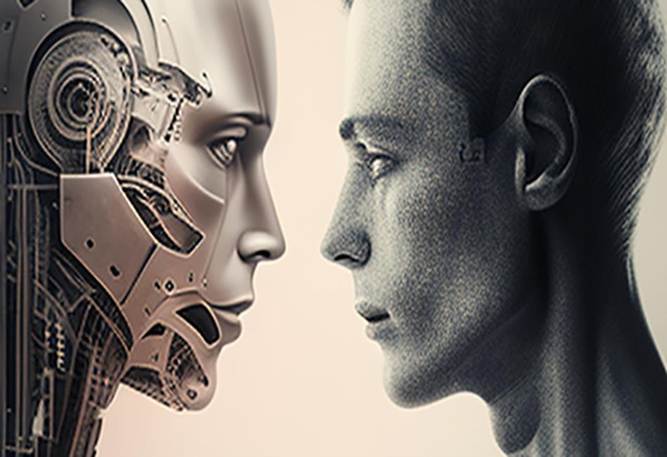
Figure 2 : Man, vs Machine
AI Defends Back: Tools & Strategies
Thankfully, defenders aren’t staying still. AI is increasingly part of the cybersecurity toolkit. Here are some of the leading defences being developed and deployed now:
- Deepfake Detection Systems
- McAfee Deepfake Detector (India): Can detect AI-generated audio within seconds; helps users learn to spot AI scams. India Today
- DeepBrain AI with Korean National Police: Created detection systems trained on large datasets including diverse facial data. GlobeNewswire
- Research tools like those using explainable AI (XAI) approaches, which not only flag suspected deepfakes but also show why they flagged them—visual cues, inconsistencies in motion, light, audio artifacts etc. arXiv+1
- AI-Enhanced Ransomware Defenses
- Google’s new AI component for Google Drive will detect suspicious file behaviour (like mass encryption or file corruption) and halt sync operations to prevent spread, with alerts & option to restore earlier file versions. The Verge+1
- Behaviour-based detection: instead of relying only on signatures (which are easily evaded once malware variants change), new systems monitor for unusual patterns (file modifications, encryption rates, access anomalies). AI helps recognize these anomalies in real time. SQ Magazine+2MIT Sloan+2
- Platform & Enterprise-Level Protections
- Solutions that inspect prompts and filter content in enterprise AI platforms to prevent model misuse or malicious prompt injection. Trend Micro
- Deepfake detection tools built into consumer apps (mobile, video, communication tools), giving users ways to check authenticity of what they see/hear. TechRadar+2Trend Micro+2
- Legal, Regulatory & Awareness Measures
- Laws in some jurisdictions criminalize deceptive AI media / deepfakes. For example, places like New Jersey have made distribution of harmful deepfakes a crime. AP News
- User education: Training people to spot signs of deepfakes, cautious behaviour with email/links/deepfake video or audio requests.
Together, these tools and strategies form a layered defence: detection, prevention, regulation, and human awareness.
Best Practices for Organizations and Individuals
To effectively defend against deepfakes & ransomware, a multi-tier approach is required. Here are tactics and best practices:
For Organizations / Enterprises
- Adopt Behaviour-based & AI-driven security layers
Go beyond signature-based antivirus. Monitor for file behaviour, mass encryption, unusual access patterns. Use AI tools that detect anomalies in real time.
- Integrate Deepfake Detection Tools
Deploy detection systems across video, audio, and documents. Tools like McAfee’s detector, DeepBrain’s systems, or custom detection models with explainability (XAI) help reduce risk.
- Zero Trust & Least Privilege
Limit access, privilege, assume breach. When every user, device, or process could be compromised, limit what each can do.
- Incident Response Plans
Have protocols ready: what to do if ransomware hits, or a deepfake impersonation is discovered. Rapid response (isolating systems, rolling backups, legal counsel, public communication) matters.
- Training and Awareness
Regularly educate employees on phishing, deepfake scams, what to watch for. Simulated phishing with deepfake content can help sharpen detection.
- Collaboration & Intelligence Sharing
Work with cybersecurity communities, share threat intelligence. Many attacks (deepfake or ransomware) follow common patterns; sharing helps build better detection thresholds.
For Individuals & Users
- Use Tools to Verify Media
Check content sources; use known detection services; rely on platforms that label AI-generated content. Be skeptical of unexpected requests, especially via voice or video.
- Secure Backups & Data Hygiene
Always have reliable backups (offline or offsite). If ransomware encrypts your files, backups are your safeguard.
- Keep Software & Systems Updated
Many attacks exploit known vulnerabilities. Patch operating systems, use up-to-date antivirus and detection tools.
- Limit Exposure
Be cautious with unsolicited video/voice calls especially if they ask for sensitive actions or money. Don’t trust automatically—authenticate via another channel.
- Privacy Settings & Minimal Data Exposure
The less your personal data is available, the harder it is for AI tools to create convincing deepfakes. Tighten social media privacy, reduce sharing of high-quality personal photos/videos.
Case in Point: Google Drive’s Latest Ransomware Defense & Norton’s Deepfake Protection
Recent developments show how companies are deploying AI to defend:
- Google Drive introduced an AI-powered feature that watches for ransomware-like behaviour (mass encryption, file corruption) and stops file synchronization, notifying users and allowing them to restore earlier file versions. This feature is in open beta (September 2025), with global deployment expected later in the year. The Verge+1
- Norton (Symantec) has rolled out “Deepfake Protection” in its mobile apps, expanding detection to audio/video-based scams. Users can analyze YouTube video links for signs of deepfake manipulation, thereby reducing risk of falling for impersonation fraud. TechRadar
These tools illustrate how AI is being deployed defensively, but also highlight limitations: geographic rollouts are uneven; detection doesn’t always catch everything; and users must still be alert.
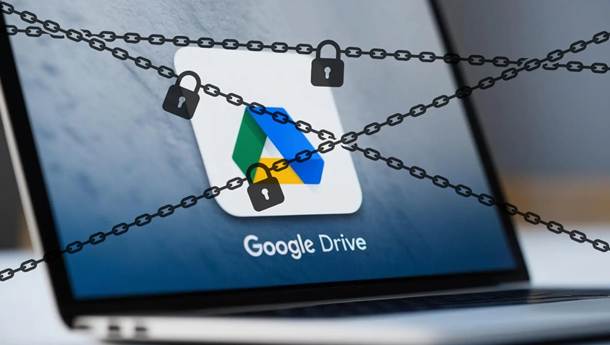
Figure 3 : Case in Point: Google Drive’s Latest Ransomware Defense & Norton’s Deepfake Protection
The Road Ahead: What’s Needed to Stay Secure
What will be critical in upcoming years for the cybersecurity ecosystem to keep pace:
- Better Detection Benchmarks & Real-World Testing
As shown in Deepfake-Eval-2024, many detectors over-fit to lab-style data and underperform in real scenarios. Benchmarks that cover varied languages, compression artifacts, cross-platform, etc. are crucial. arXiv
- Explainable & Transparent Models
Users and organizations need tools that don’t just produce “fake/real” but explain why. That improves trust, helps debugging, improves legal admissibility. Papers like DF-P2E (Prediction to Explanation) are pushing in that direction. arXiv
- Regulation & Policy
Laws against fraudulent deepfakes, requirements for watermarking or digital provenance, liability rules. Jurisdictions that criminalize harmful deepfake content or misinformation help build deterrents. AP News
- Collaboration Between Sectors
Private companies, platforms, governments, academia, civil society need to share threat intelligence, build detection tools together, and promote awareness.
- Ethical AI Design
Ensuring that generative models are built with guardrails: embedding identifiers, watermarks, perhaps requiring usage consent. Also, balancing detection vs privacy.
- Moving from Reactive to Proactive Defense
Rather than responding after an attack, organizations need continuous monitoring, threat hunting, anomaly detection, and red-teaming (simulating deepfakes or ransomware threats in safe environments) to discover vulnerabilities before exploitation.
Conclusion
Deepfakes and ransomware are now part of the modern threat landscape. AI has supercharged these threats, making them more believable, more adaptive, and more widespread. But the same technological advances also equip us with new tools for defines: detection models, behavioural monitoring, real-time alerts, and legal/regulatory mechanisms.
The key message is this: AI isn’t only the problem—it must be part of the solution. Defending against deepfakes and ransomware in 2025 requires a layered approach combining technology, policy, human awareness, and collaboration.
For organizations, this means investing in AI defines, updating systems, educating users, and building resilient architectures. For individuals, staying vigilant, using detection tools, maintaining good digital hygiene, and being skeptical when things look too polished or too urgent.
If we want trust in media and security of data to survive the AI age, we must defend smarter—and fast.
